

Here’s the thing. If you’ve ever watched a token disappear from a wallet and felt that stomach drop, you get it. I keep tabs on dozens of addresses. It gets messy fast. Initially I thought explorers were just pretty dashboards for nerds, but then I realized they’re the fastest way to answer “what actually happened?” when gas isn’t the issue—indexing and decoding are.
Whoa! Solana moves fast. The chain pushes so many transactions that a raw RPC feed can feel like drinking from a firehose. You want an explorer that slices that stream into human-sized chunks. My instinct told me early on to favor tools that decode inner instructions, show program logs, and let you search by mint, owner, or signature. That practice has saved me from chasing red herrings more than once.
Seriously? Yes, really. I once traced a failed swap that crossed two DEXes by following inner instructions instead of just looking at top-level transfers. It looked like chaos until the explorer revealed which program returned an error and where lamports moved. Actually, wait—let me rephrase that: it’s not only about failures; subtle side effects often live inside inner instructions, and unless the explorer exposes them you miss the real story of a transaction. That kind of visibility matters when you need to prove provenance or dispute a marketplace claim.
My go-to starting point for quick lookups
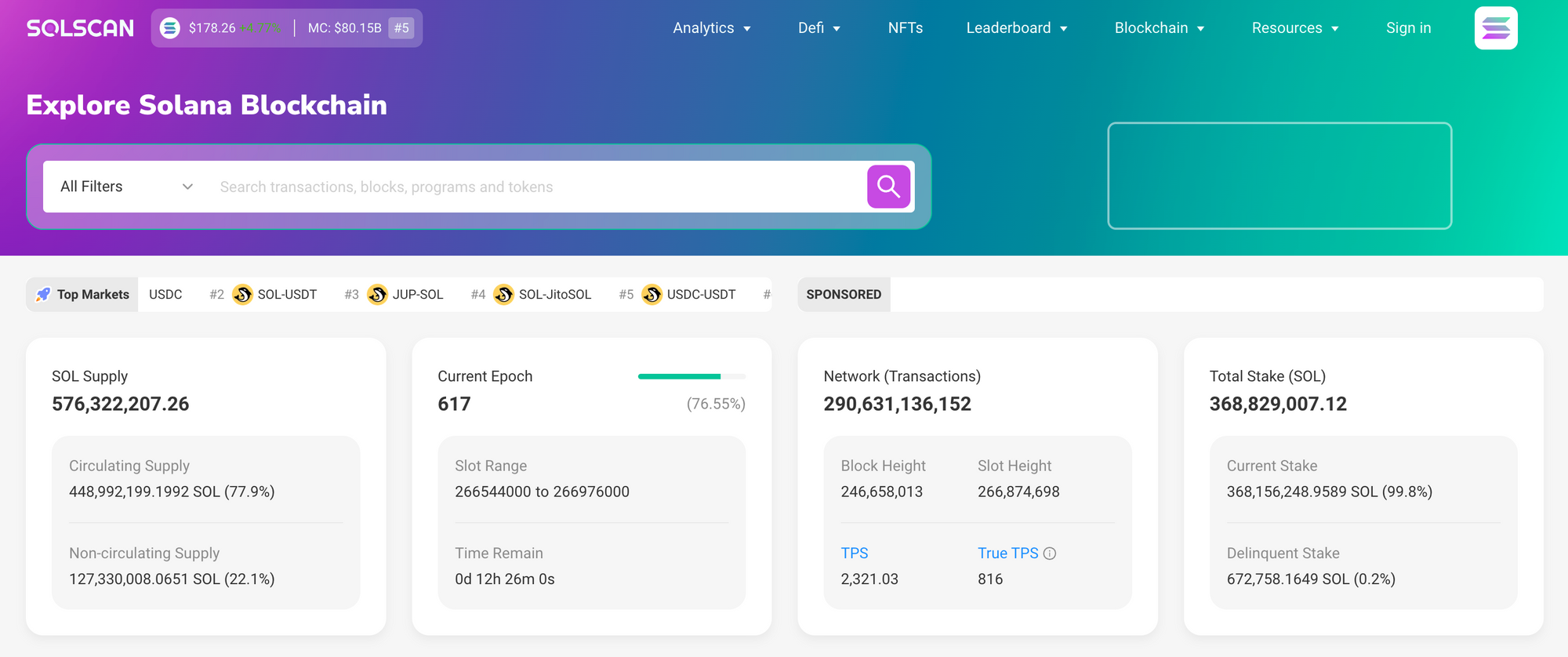
Check this out—when I want a readable breakdown of on-chain activity I often start at the solscan explorer official site. The layout surfaces token transfers, mint metadata, and decoded instructions without making you hunt. I liked it most when I used it to reconcile a messy escrow swap; export features and owner history saved me hours. I’m biased, but for everyday audits and quick provenance checks it’s a top-tier first pass. Use it as a starting tool, and cross-reference with raw RPC or node logs for heavyweight investigations.
Hmm… here’s another practical bit. If you track NFTs, always check both the on-chain pointers and the off-chain metadata. The token might show a perfectly valid metadata URI on-chain, but the actual art or JSON could be hosted on a centralized server that disappears tomorrow. That tension—on-chain permanence versus off-chain fragility—is the reason explorers are useful but not omniscient. I wished someone told me that sooner. Somethin’ to watch for.
Short tip: use signature search when in doubt. Searching by transaction signature gives you the canonical record. It shows block time, fee payer, and all inner instructions. Long-form tracing across multiple signatures is how I untangled a rug-pull simulation last year—yep, very very important. If you need program-specific details, filter for program IDs and then scan decoded instructions for token account changes and CPI calls.
On the technical side, not all explorers index the same way. Some prioritize speed and casual UX, others go deep on program decoding and analytics. On one hand a lightweight explorer might be snappy for quick checks, though actually the heavy lifters that store richer indexes let you run historical queries like “show me all transfers for this mint across the last 10k slots” without hammering an RPC node. Initially I thought one tool would cover everything, but now I keep a couple of favorites open and flip between them depending on task complexity.
Watchlists and alerts are underrated. Set address watches for high-value wallets and token mints. Alerts that notify on transfer, burn, or new holder events can turn a 24/7 job into a manageable process. I use emailed alerts for big moves and Slack pings for dev/test wallets. Seriously, if you care about a collection, automating notifications is the only way to sleep during a drop weekend.
Privacy note: public explorers leak a lot. Every transfer and owner change is visible, so consider secondary addresses or custodial abstractions if you want some operational security. On the other hand, that transparency is why we can audit marketplaces and verify royalties. There’s a trade-off between accountability and privacy; think it through for your project or collection.
Developer tip: when you’re debugging contract interactions, copy the raw logs and signature and paste them into the explorer’s transaction view. Expand inner instructions. Look for program-returned excess values and log messages. The decoded instruction names often point you to specific programs to audit. If you see CPI (cross-program invocation) chains, map them out—sometimes the unexpected transfer is two or three CPIs deep.
I’ll be honest—explorers aren’t perfect. Indexing lags happen during traffic spikes, metadata can be malformed, and some explorers mislabel program instruction names. I am not 100% sure how each one handles edge cases, and that uncertainty is why I cross-validate. On the bright side, the ecosystem’s tooling is improving quickly; what was opaque a year ago is often parsed cleanly now.
Here’s a quick checklist I use when auditing an NFT transfer or transaction:
- Search by signature, then by involved addresses. (short check)
- Confirm mint and metadata URI. (medium)
- Inspect inner instructions and program logs for side effects. (medium)
- Cross-check holder history and royalty settings. (long—because you might need to trace several transfers to confirm provenance)
- Export CSV if you need a ledger for legal or accounting review. (medium)
FAQ
How do I verify an NFT’s provenance?
Start with the mint’s transaction history, then inspect each transfer and creator signature. Check the on-chain metadata pointers and, if available, pin or archive the off-chain JSON and assets. Correlate mint authority and creator addresses to known wallets when possible, and use decoded logs to see if any CPIs changed ownership behind the scenes.
Can explorers show me pending transactions?
Explorers typically reflect confirmed blocks and sometimes unconfirmed or recent blocks depending on their indexing. During congestion you may see slight delays. For real-time pending checks, query an RPC node directly or use websocket feeds; explorers are better for human-friendly post hoc analysis.
Which explorer features matter most?
Decoded inner instructions, program logs, token transfer timelines, owner history, CSV export, and reliable indexing. Alerts and address watchlists are also huge for active traders and collectors. Pick tools that match your workflow: quick UX for casual lookups, deep indexes for audits.