

A common misconception about gas optimization is that it means choosing the lowest fee and approving a transaction quickly. In practice, the cheapest transaction can still be the wrong one: it may authorize more token access than intended, route through an unexpected contract, or fail after consuming gas. Consider a familiar US DeFi scenario: you are swapping a token on an EVM network, the wallet asks for an approval, then presents the swap itself. Those are separate on-chain actions, with separate costs and risks. Understanding that distinction—not chasing a fee estimate alone—is the foundation of better wallet hygiene.
Gas is the network’s charge for executing computation and recording state changes. A wallet cannot make that underlying work disappear. It can, however, help users avoid unnecessary interactions, inspect what a transaction is expected to do, and manage permissions that persist after a transaction ends. That broader view is especially useful across multiple EVM chains, where the same token and dApp habits can have different fee conditions and contract addresses.
From one approval to a chain of interactions
Many DeFi actions involve more than the visible outcome. A token swap may require an approval that lets a smart contract spend a user’s tokens, followed by a separate transaction that executes the swap. The approval is a permission, not the trade itself. Depending on the contract and the approval amount, it may remain usable later, even when the user has finished with the protocol.
This history explains why approval management matters. Early wallet interactions often trained users to treat a permission prompt as routine setup. But a persistent allowance is better understood as an access key with a defined scope: which token, which spender, and how much can be spent. A broad or unlimited allowance can reduce friction on future trades, but it also gives the approved contract greater potential access if the contract or its control is compromised. Smaller allowances can limit exposure, at the cost of additional approval transactions and gas when more tokens are needed.
There is no universal best setting. A trader who repeatedly uses a well-understood protocol may reasonably value convenience; someone testing a new dApp may prefer a narrower allowance and then revoke it. Revocation itself is an on-chain transaction, so it costs gas and does not reverse any transfer that has already happened. The practical goal is not to erase every permission automatically, but to keep permissions intentional and proportionate.
Gas savings begin before the fee screen
Users often focus on the displayed gas price, but transaction cost also depends on how much execution work the operation requires. A simple transfer and a complex interaction with multiple contracts do not use the same amount of computation. Network demand affects the price users compete to pay for that work. As a result, a fee estimate is a snapshot, not a promise that a transaction will be cheap, fast, or successful.
Useful optimization starts with avoiding needless transactions. Check whether the action requires an approval and a follow-up call; avoid repeating an interaction because the first confirmation is still pending; and consider whether a transaction is worth making on the chosen network at current conditions. A lower-fee EVM chain may be attractive, but moving assets to it can introduce bridge costs, delays, and additional contract risk. Comparing only the swap fee misses the cost of getting there and back.
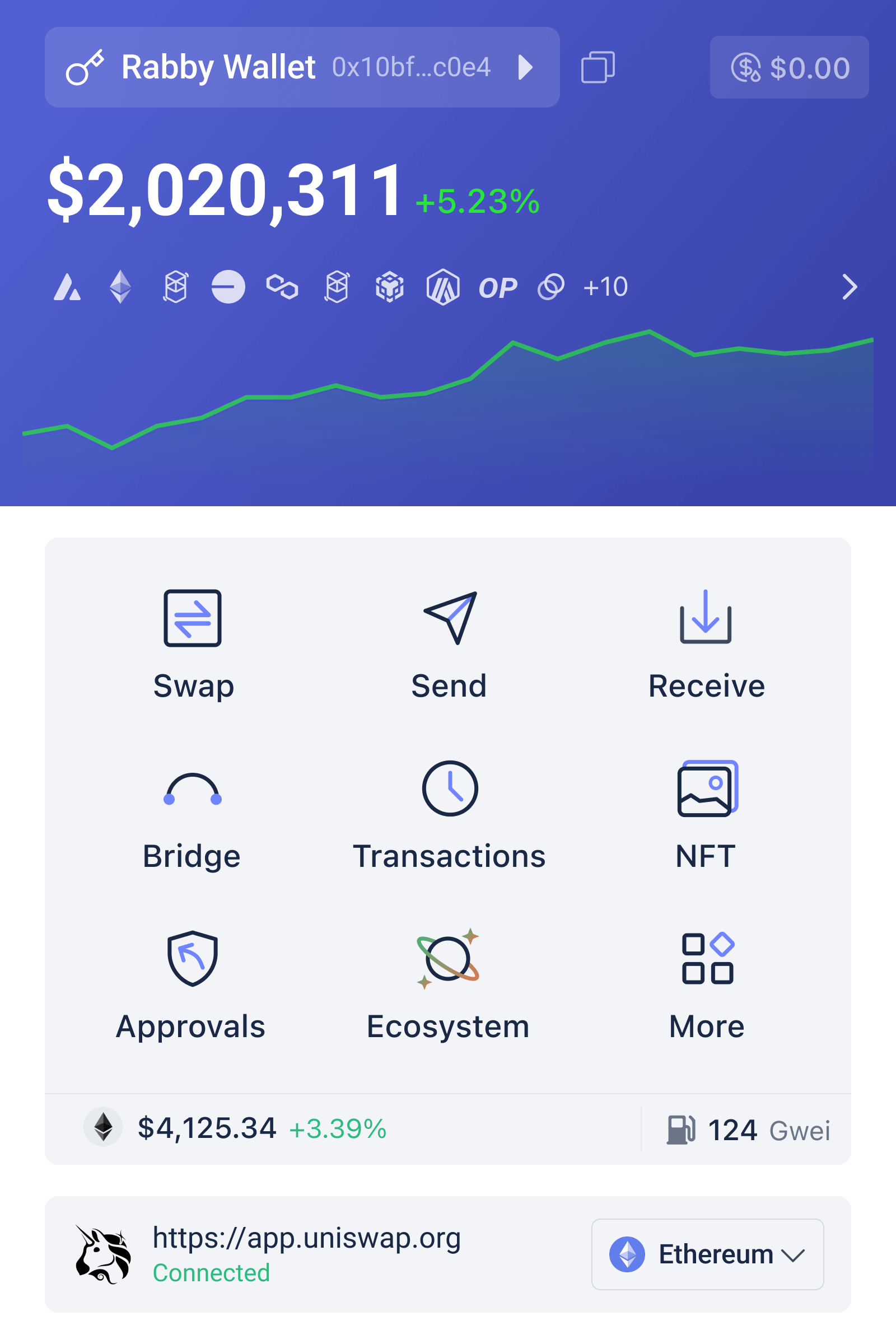
Wallet features can improve the decision process without changing these underlying economics. Rabby supports more than 100 EVM-compatible networks and can switch to the network associated with a connected dApp. Its transaction pre-confirmation feature estimates balance changes before signing, while a risk scanner flags some potentially malicious payloads, compromised contracts, or phishing risks. These are useful review aids, not guarantees: simulation depends on the available information and conditions at the time, and a warning system cannot prove that a contract is safe.
Read the transaction as a permission and an outcome
A disciplined review asks two questions. First: what authority am I granting? Second: what result should this transaction produce? For an approval, inspect the token, spender, and allowance amount. For the subsequent interaction, compare the expected balance changes with the action you intended. If you meant to swap one asset for another, an unexpected token movement or recipient deserves attention before signing.
This is where transaction simulation can help correct a subtle misconception: a familiar dApp interface does not make every transaction self-explanatory. The interface expresses an intention; the signed transaction encodes instructions for contracts. A pre-confirmation view that shows estimated balance changes can make that gap easier to notice. Still, users should treat it as a second view, not an independent audit. A simulation can be incomplete, and contract behavior may depend on execution conditions that change before inclusion.
Rabby combines this review approach with an approval-management feature for viewing and revoking prior allowances. Its keys are encrypted and stored locally, so transaction signing does not require a wallet back-end server. The project also describes its code as open-source under the MIT license and notes a security audit by SlowMist. Those properties offer useful transparency and architectural context, but they do not eliminate risks from compromised devices, deceptive sites, malicious contracts, or mistakes in user judgment. For readers comparing browser tools, rabby may be worth evaluating for its transaction review and multi-chain workflow; the same careful signing habits remain necessary with any wallet.
A reusable routine for multi-chain DeFi
Before signing, identify the network, the contract interaction, and the permission being requested. Confirm that the dApp action matches your intent, then inspect the wallet’s estimated balance changes and any risk warnings. Afterward, review allowances periodically, especially for protocols you no longer use. Revoke only when the expected reduction in exposure is worth the transaction fee and any future friction of granting access again.
For US users, stablecoin gas options can also affect day-to-day planning. Rabby’s Gas Account feature supports paying network fees with stablecoins such as USDC and USDT, which may help users who do not keep a native token on every chain. But paying gas in a stablecoin does not mean the transaction is free or that every network and situation has identical costs. Check the supported conditions in the wallet, and keep in mind that using an external exchange to acquire crypto may still be necessary: Rabby currently does not provide a native fiat on-ramp.
The recent project messaging emphasizes Rabby as a wallet for Ethereum and EVM chains. The more useful test for users is concrete: does the wallet make network selection, permission scope, and expected transaction effects easier to inspect? If multi-chain activity continues to spread, the ability to compare those details across networks may matter as much as a headline fee estimate. That is a conditional implication, not a guarantee that one interface can prevent every costly mistake.
FAQ
Does revoking an approval recover gas or tokens?
No. Revocation is a new on-chain transaction and usually requires a network fee. It stops the approved spender from using the remaining allowance going forward, but it cannot undo transfers already made or recover funds lost through a prior exploit.
Is an unlimited token approval always unsafe?
Not automatically, but it creates broader potential exposure than a limited allowance. The trade-off is convenience versus permission scope. Consider how much you trust and use the protocol, and whether paying for smaller or renewed approvals is worthwhile for your situation.
Can transaction simulation guarantee a safe transaction?
No. A simulation estimates likely effects using available transaction data and conditions. It can help reveal unexpected balance changes, but it cannot guarantee future execution behavior or establish that a contract and website are trustworthy.